The Importance of Regular HVAC Maintenance in Minnesota’s Climate
I’ve been doing this work for 30 years, and if there’s one thing I see consistently throughout Plymouth and the western Twin Cities suburbs, it’s the difference between a system that’s been maintained and one that hasn’t. HVAC maintenance shows up in how the system runs, how long it lasts, and how often I get called for an emergency repair in the middle of February.
Minnesota is genuinely hard on HVAC equipment. Furnaces run for months at a stretch through some of the coldest weather in the country. And then air conditioners have to pick up where they left off when summer arrives. Systems that get regular maintenance hold up to that demand. hold up to that demand. Systems that don’t get it tend to fail at the worst possible time.
Twice a Year Is the Standard for HVAC Maintenance — Here’s Why
The right maintenance schedule for a Minnesota home is straightforward: a furnace tune-up in the fall before heating season, and an AC tune-up in the spring before cooling season. That’s it. Two visits a year, timed to catch most issues before you actually need the system to perform.
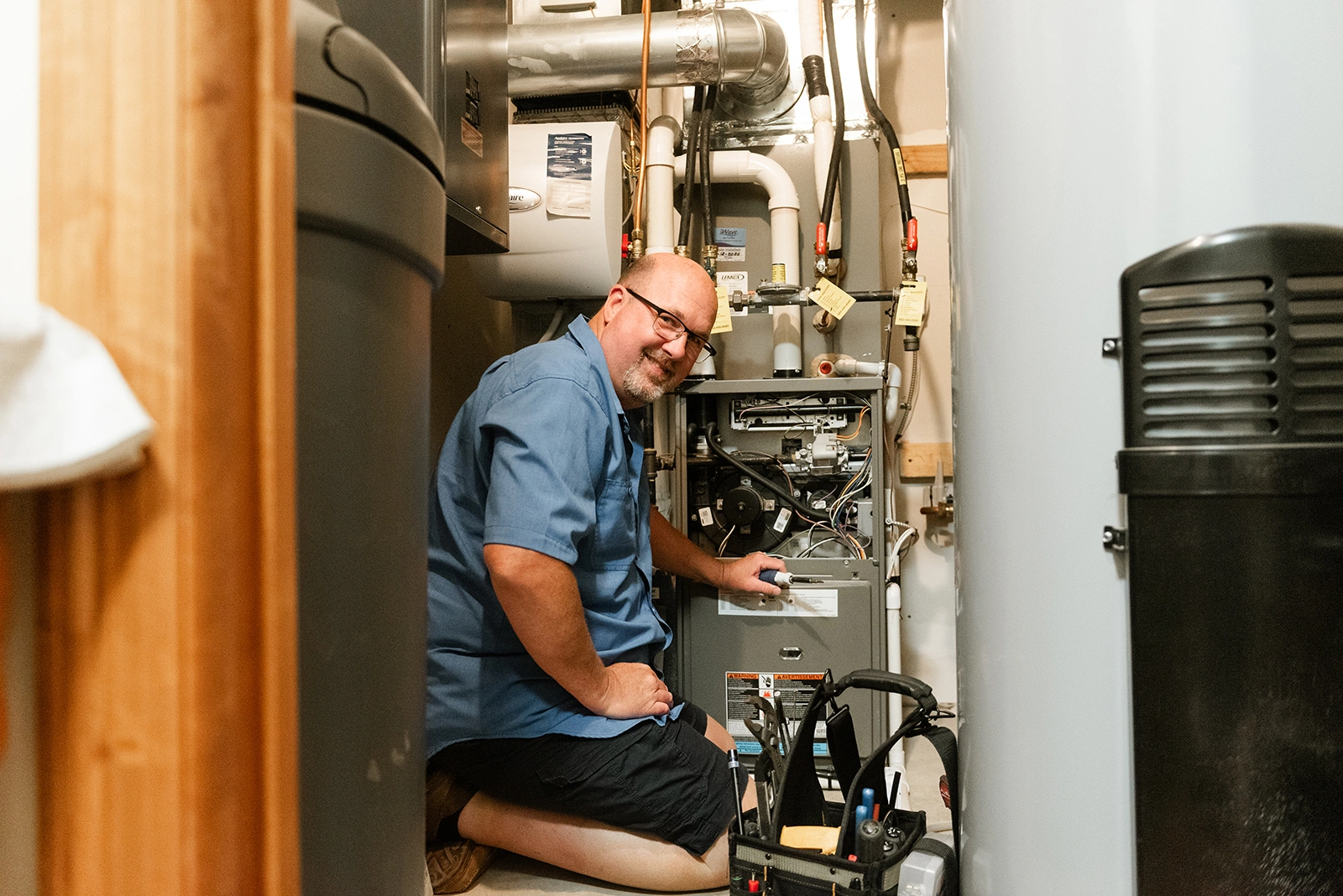
The fall furnace tune-up is about making sure everything is in order before you’re relying on it through a Minnesota winter. That means inspecting the heat exchanger, checking the burners, testing safety controls, verifying airflow, and confirming the system is running the way it should. The spring AC tune-up follows the same logic — after sitting idle through the winter, your air conditioner needs to be checked before the heat arrives and you need it to work.
If you want to know exactly what’s involved in each visit, I cover it in detail on the furnace tune-up and AC tune-up pages.
What Happens When Maintenance Gets Skipped
I’m not going to tell you that skipping a tune-up means your system will immediately break down. It might run fine for another season. But what I see in practice is that deferred maintenance compounds. Small issues I would have caught and addressed during a routine visit turn into bigger ones. Components showing early signs of wear get pushed harder than they should. And eventually something fails — usually when the system is running hardest, on the coldest day of the year or in the middle of a July heat wave.
The other thing that happens quietly is efficiency loss. A system that isn’t clean and properly calibrated works harder than it needs to. That shows up in your energy bills over time, even if the system never technically breaks down.
Maintenance Extends the Life of Your Equipment
A furnace or air conditioner is a significant investment. How long it lasts has a lot to do with how it’s been cared for. A well-maintained system running in a Minnesota home can last 15 to 20 years. A neglected one might need replacement in 10 to 12. That difference represents real money — not just in the cost of the equipment itself, but in the disruption of an unplanned replacement.
Routine maintenance is how you protect that investment. It’s not complicated or expensive, and it pays for itself many times over in avoided repairs and extended system life.
Warning Signs Worth Paying Attention To
Even with regular maintenance, systems can develop issues between visits. A few things worth paying attention to:
None of these are guaranteed to mean something serious, but all of them are worth a call. Catching a problem early is almost always less expensive than dealing with it after it’s had time to get worse.
The Bottom Line
Regular maintenance isn’t about finding something to fix. Most of the time I show up for a tune-up, the system is in good shape and I leave it running better than when I arrived. That’s the point — keeping it that way, season after season, so you’re not dealing with a breakdown when you can least afford one.
To schedule your furnace tune-up or AC tune-up, visit the relevant service page or give me a call directly.