Ductless HVAC Systems: Pros & Cons for Twin Cities Homes
Ductless HVAC systems come up regularly in my conversations with homeowners throughout Plymouth and the western Twin Cities suburbs — and for good reason. They’re a genuinely practical solution in the right situations. But they’re not the right fit for every home, and I’d rather give you an honest picture of both sides than oversell something that may not be what you need.
Here’s what I tell homeowners who are trying to figure out whether a ductless system makes sense for their situation.
When Ductless Makes the Most Sense
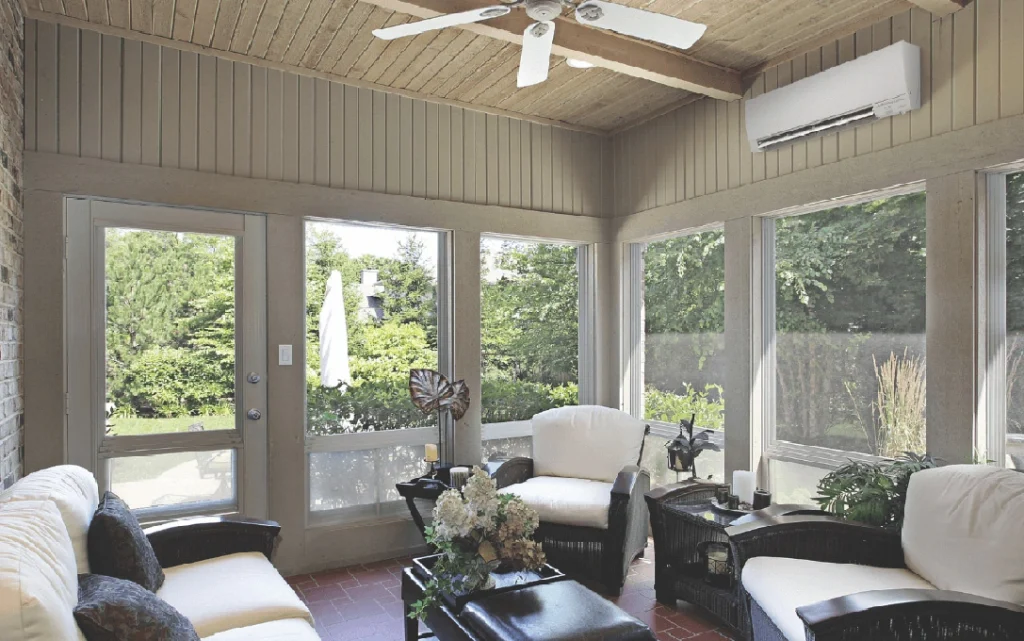
The clearest case for a ductless HVAC system is when extending existing ductwork isn’t practical. Older homes in the western Twin Cities were often built without forced air — or with duct systems that can’t reasonably be extended to a new space. Room additions, converted garages, finished basements, attics turned into living space — these are exactly the situations where ductless shines.
Instead of overhauling your existing system or running new ductwork through finished walls and ceilings, a ductless unit handles the new space on its own. It doesn’t put any additional demand on your existing furnace or AC, and it gives that space its own independent temperature control.
The Efficiency Advantage
One of the real advantages of ductless systems is efficiency. Traditional forced-air systems lose a meaningful amount of energy through ductwork — leaks, poor insulation, long runs. Ductless systems eliminate that entirely by conditioning the space directly.
Most ductless systems also use variable-speed compressors that adjust output based on what the space actually needs, rather than cycling fully on and off. That translates to more consistent temperatures and lower energy use over time.
Zoned Comfort
Each indoor unit operates independently, which means you’re only conditioning the spaces you’re actually using. For a home with multiple zones — or a specific room that’s always too hot or too cold — that level of control makes a real difference. You’re not heating or cooling the whole house to fix one problem room.
Cold Weather Performance — What to Know
This is the question I get most often about ductless systems in Minnesota, and it’s a fair one. Older ductless technology struggled in extreme cold. Modern cold-climate systems are a different story — many are rated to operate efficiently down to -13°F or lower, which covers the vast majority of what a Minnesota winter throws at us.
That said, not every ductless system is a cold-climate system. If you’re considering ductless as a primary heat source in a Minnesota home, make sure the system you’re looking at is specifically rated for low-ambient operation. I’ll always go through that with you before making a recommendation.
Maintenance and Lifespan
Ductless systems are relatively low-maintenance, but they do need attention. The indoor filters should be checked monthly during heavy use — they’re easy to clean and make a real difference in efficiency and air quality. The outdoor unit needs to stay clear of snow and debris. And an annual professional check covers refrigerant levels, electrical connections, and overall performance.
With proper maintenance, a ductless system should give you 15 to 20 years of reliable service — comparable to a traditional central system.
The Honest Tradeoffs
Ductless systems cost more upfront than a window unit or portable AC, and in some cases more than extending existing ductwork — particularly in new construction where duct runs are straightforward. The economics shift in retrofit and remodel situations, where running new ductwork gets expensive fast.
They’re also a visible installation. The indoor air handler mounts on the wall, which works fine in most spaces but isn’t for everyone aesthetically. Ceiling cassette options exist for a cleaner look, but they add cost.
Is A Ductless HVAC System Right for Your Home?
It depends on the space, the situation, and what you’re trying to accomplish. For additions, conversions, and spaces without existing ductwork, ductless is often the most practical and cost-effective solution. As a whole-home replacement for a central system, it’s a more involved conversation — and one worth having before making any decisions.
To learn more about ductless systems and what installation looks like, visit my Ductless Heating & Cooling page.