DIY AC Repair: When to Fix It Yourself & When to Call a Professional
Air conditioning issues can be frustrating, especially during the peak of summer heat. Whether your system is blowing warm air, short cycling, or refusing to turn on altogether, the idea of waiting for a service appointment can be inconvenient.
Many homeowners wonder whether they can safely resolve minor problems on their own. While some AC issues are simple enough to handle without professional assistance, others require specialized knowledge, tools, and training.
Understanding the difference can help you save time and money and avoid further damage to your system.
In this article, we’ll explore the line between DIY and professional air conditioning repairs. With guidance from Brinks Heating & Air, you’ll be equipped to make informed decisions about your next steps.
Safe DIY Fixes for Common AC Issues
Some AC issues can be addressed safely without professional help, especially when the problem stems from basic maintenance or easily accessible components.
- Clogged or dirty air filter: This can significantly reduce airflow and cause your system to run inefficiently or shut down entirely. Replacing or cleaning your air filter every 30 to 90 days can restore airflow and improve system performance.
- Thermostat issues: If your thermostat isn’t working correctly, checking the batteries or recalibrating its settings can often resolve temperature inconsistencies.
- Clearing debris around your outdoor condenser unit: Leaves, grass clippings, and other obstructions can restrict airflow and lead to overheating. With the power turned off, you can gently rinse the condenser coils using a garden hose and remove visible debris to help the unit operate more efficiently.
- Checking your circuit breaker: It is a simple but often overlooked step. A tripped breaker may be the only issue preventing your AC from turning on.
These low-risk tasks don’t require advanced tools or HVAC knowledge, making them ideal for homeowners comfortable with basic maintenance.
Addressing these simple problems first will help you avoid unnecessary service calls and reduce system strain. For more technical concerns or symptoms that persist, consult a technician to avoid further complications.
How to Troubleshoot Your AC System
Before calling a technician, homeowners can conduct a series of troubleshooting steps to identify common AC issues.
- Begin by confirming that the thermostat is set to “cool” mode and the temperature is set lower than the current room temperature. If the unit isn’t responding, check the thermostat display—if it’s blank, it could be a power issue or dead batteries.
- Next, inspect the circuit breaker panel to ensure the AC breaker hasn’t tripped. Resetting the breaker may restore function if the system is overloaded.
- You should also verify that the air filter is clean, as restricted airflow can cause freezing or overheating.
- Inspect vents for blockages and ensure windows and doors are closed tightly to reduce strain on the system.
- If your system is running but not cooling, examine the outdoor unit for debris buildup or ice formation, which could indicate a refrigerant or airflow issue. Any ice accumulation on coils should be left to thaw with the system turned off.
Many of these issues can be identified visually or through simple checks, allowing you to gather useful information before contacting a technician. However, if the problem appears electrical or related to refrigerant pressure, further diagnosis requires advanced equipment and knowledge.
For detailed support, visit our air conditioning repair page to explore solutions offered by trained professionals.
Essential Tools for Basic AC Repairs
Basic AC maintenance and simple repairs can often be completed using common tools. A digital thermometer is useful for verifying temperature output at supply and return vents, helping you determine whether your system is cooling effectively.
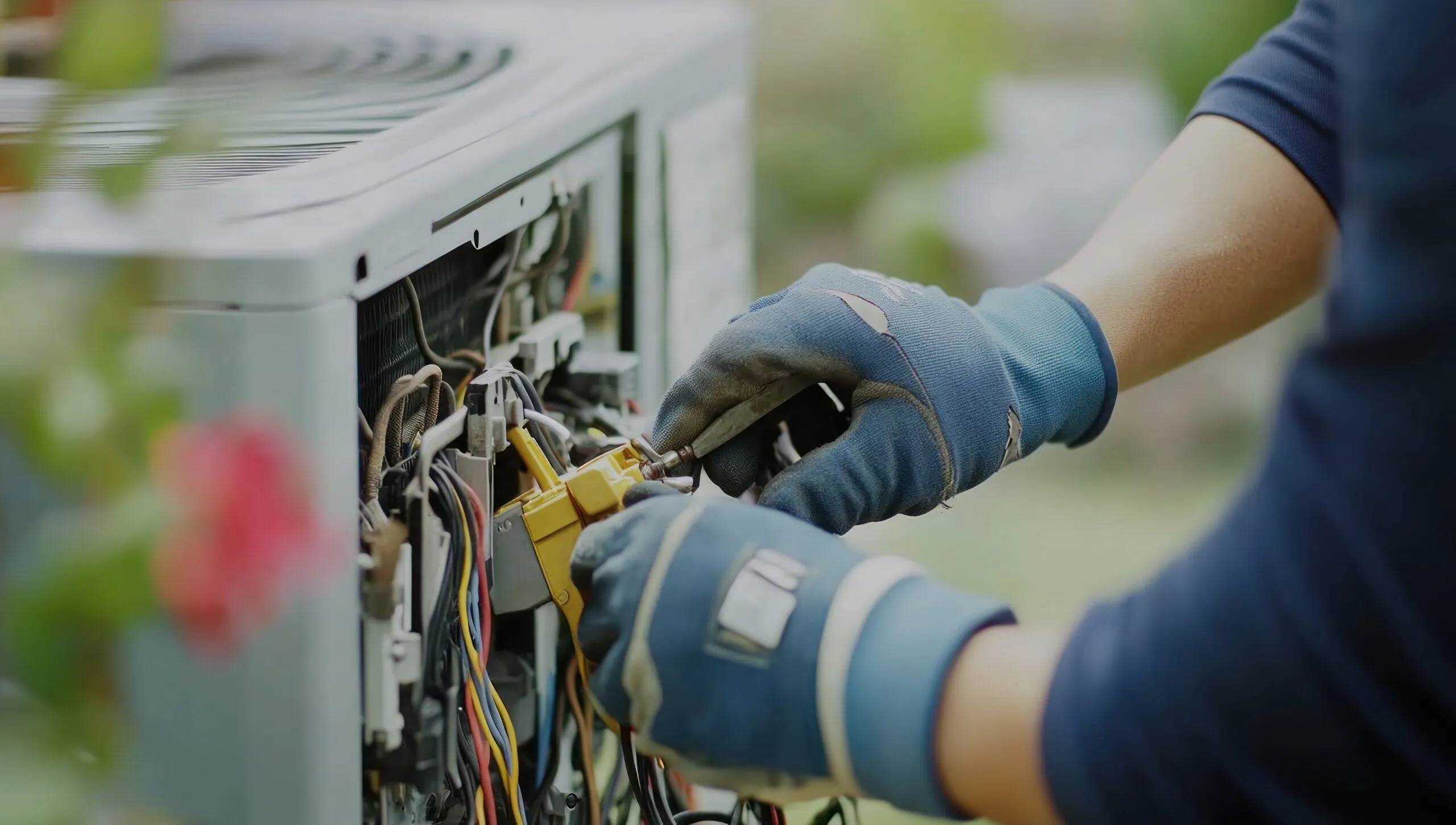
A basic multimeter allows you to check voltage and continuity in components such as capacitors, fuses, or contactors—key to identifying electrical issues if you're familiar with safe usage practices.
To remove panels and access internal components, you’ll also need a screwdriver set (both flathead and Phillips), a wrench, needle-nose pliers, and a cordless drill.
A garden hose with a gentle spray nozzle and a soft-bristle brush can safely clear condenser coil buildup for outdoor unit cleaning.
Having a flashlight and ladder on hand can make access to the attic or basement easier if you’re planning to clean or replace filters in a ducted system.
While these tools cover most surface-level maintenance and visual diagnostics, repairs involving refrigerants, pressurized systems, or sealed electrical components should not be attempted without HVAC certification. Improper handling can lead to system damage or personal injury.
When You Should Avoid DIY AC Repairs
Not all AC issues should be handled by homeowners. Refrigerant leaks, compressor problems, or malfunctioning electrical components require specialized equipment and certified handling procedures.
Attempting to service refrigerant lines without proper certification violates federal regulations under Section 608 of the Clean Air Act and may result in fines or legal consequences. Due to pressurized systems and chemical exposure, these tasks pose health and safety risks.
You should also avoid DIY repairs if your unit is under manufacturer warranty. Many warranties become void if unauthorized repairs are performed, which could leave you responsible for the full cost of replacement parts or services.
If the repair involves disassembling sealed components, interacting with electrical relays, or altering factory wiring, it’s best left to licensed professionals who can work within safety and warranty guidelines.
Recognizing when to defer to expert help is critical to responsible home maintenance. If your troubleshooting has ruled out surface-level problems and the system still isn’t functioning, a trained technician has the tools and experience to provide an accurate diagnosis and safe solution. Attempting complex repairs without the necessary knowledge can turn a manageable issue into a system-wide failure.
How to Ensure Your DIY Repairs Are Effective
Once you’ve completed a DIY repair or maintenance task, verifying that the system is functioning correctly is essential. Start by setting the thermostat to cooling mode and observing the system’s operation over a full cycle.
Check for consistent airflow from vents, a stable and appropriate temperature drop, and that the unit shuts off after reaching the desired setting. Any irregular cycling, noises, or temperature inconsistencies may indicate unresolved problems.
You can use a thermometer to compare the temperature at the supply and return vents—typically, the air coming from the supply should be 15–20°F cooler than the air going into the return.
Additionally, monitor energy bills over the next billing cycle. If costs remain elevated despite repairs, or if cooling performance is inconsistent, the issue may not be fully resolved.
Unusual smells or sounds during operation can also be signs of underlying mechanical or electrical issues.
If after several days your system shows no improvement, the problem may be more serious than initially diagnosed. At that point, contacting Brinks Heating & Air can help confirm your assessment and perform any necessary advanced repairs.
Continuing to operate a malfunctioning system can increase wear and reduce its lifespan, so if your DIY efforts fail, early expert evaluation is always a sound decision.
Brinks Heating & Air Helps With Repairs, Troubleshooting, & More
Whether you're dealing with a minor maintenance issue or a larger system malfunction, Brinks Heating & Air offers expert service across all HVAC repair and installation aspects. Based in Plymouth, Minnesota, our licensed technicians provide detailed diagnostics and long-term solutions that go far beyond the limits of DIY repairs.
If your air conditioning system continues to show signs of poor performance after basic troubleshooting—such as low airflow, strange noises, or uneven temperatures—Brinks Heating & Air is ready to assist.
With decades of experience, advanced tools, and industry certifications, we handle everything from routine service to complex repairs involving electrical systems and refrigerants. To request a system evaluation, schedule a repair, or ask about seasonal tune-ups, you can contact us online or by phone at 763-219-7859.