How Smart Thermostats Can Save You Money & Add Comfort
Smart thermostats have changed how homeowners manage comfort and energy use, especially in regions where heating and cooling demands shift sharply throughout the year.
These devices go beyond basic temperature control by responding to usage patterns, outdoor conditions, and household schedules. When set up correctly, smart thermostats reduce wasted energy while keeping indoor temperatures more consistent during both extreme cold and warmer seasons.
For homeowners working to balance comfort with utility costs, the technology behind modern thermostats offers measurable advantages backed by energy data and real-world performance.
For households served by Brinks Heating & Air, understanding how smart thermostats function within a complete HVAC system helps explain why they play a growing role in energy-efficient homes. To learn more about modern thermostats, the topics addressed here offer a grounded starting point for informed decisions.
Smart Thermostat Features That Matter: Remote Access, Learning Modes, & Zoning
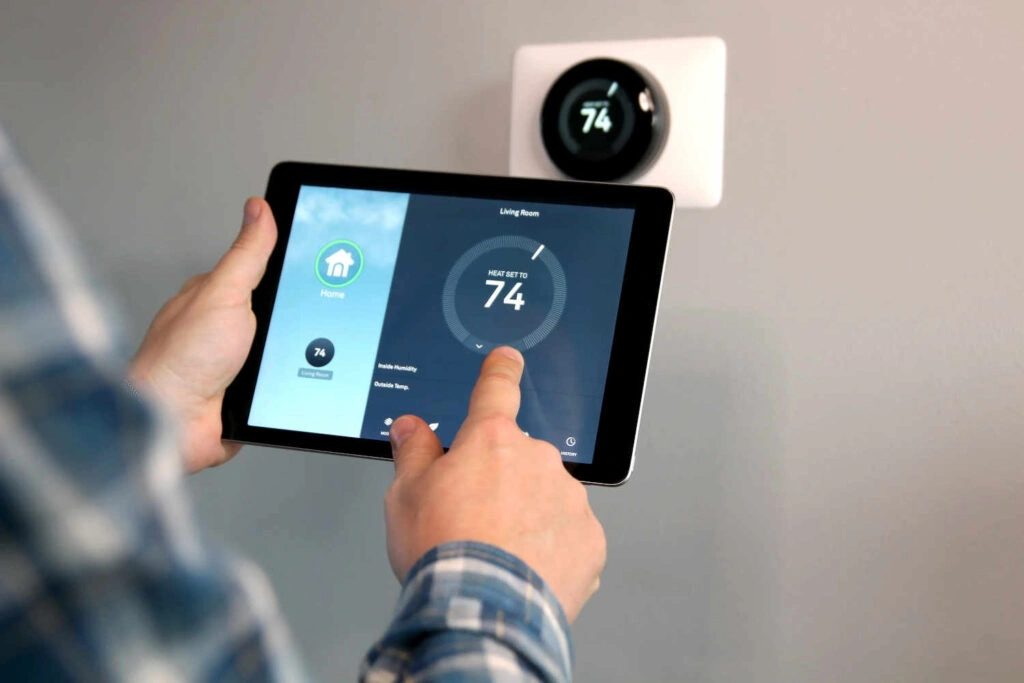
Smart thermostats are defined by their ability to respond to how a home is actually used. Remote access allows homeowners to adjust temperatures from a mobile device, which is useful when schedules change or when travel plans shift unexpectedly.
From a technical standpoint, remote access works through Wi-Fi connectivity and cloud-based control platforms that communicate directly with the thermostat. This prevents unnecessary heating or cooling during unoccupied hours and allows adjustments before occupants return home.
Learning modes rely on embedded algorithms that analyze temperature changes, run times, and manual adjustments over weeks of operation. These systems gradually predict preferred settings without constant user input.
Unlike fixed programming, learning thermostats adapt to seasonal transitions, which is especially relevant in homes with variable occupancy.
Zoning capabilities further refine comfort by controlling different areas of the home independently, reducing energy waste in unused spaces while maintaining consistent temperatures where people spend the most time.
When paired with modern HVAC systems, advanced thermostats coordinate temperature control more efficiently than traditional single-point controls. Zoning dampers, sensors, and thermostat logic work together to distribute conditioned air based on real demand rather than assumptions, improving both comfort consistency and system efficiency.
Why Minnesota’s Climate Makes Smart Thermostats More Effective
Minnesota’s long heating season and wide temperature swings place sustained demand on residential HVAC systems. Smart thermostats respond to these conditions by adjusting run cycles based on indoor recovery time and outdoor temperature trends.
During extreme cold, precision control reduces short cycling and unnecessary temperature overshoot, which helps maintain steady indoor conditions without overworking the system.
Cold-climate performance benefits also come from setback recovery logic. Smart thermostats calculate how early heating must begin to reach target temperatures during winter mornings.
This avoids running systems at maximum output for extended periods, which can increase energy use and mechanical stress. Homes in Plymouth and surrounding areas experience fewer temperature fluctuations when thermostats adjust gradually instead of reacting after comfort has already dropped.
Smart controls also account for shoulder seasons, when heating and cooling demands overlap. Automated adjustments prevent unnecessary system operation during mild weather while maintaining indoor comfort. This responsiveness aligns closely with Minnesota’s variable climate patterns, where daily conditions can change quickly.
System Compatibility With Furnaces, Heat Pumps, & Multi-Zone Setups
Not all smart thermostats function the same way across different HVAC systems. Compatibility depends on voltage requirements, wiring configurations, and system type.
Conventional furnaces typically support most smart thermostat models, while heat pumps require thermostats designed to manage reversing valves, auxiliary heat, and defrost cycles.
Multi-zone systems introduce additional complexity. Each zone requires proper sensor placement and damper control to maintain balance across the system.
Smart thermostats designed for zoning integrate with control boards that regulate airflow distribution rather than relying on a single temperature reading. This prevents pressure imbalances and uneven heating across the home.
System integration is most effective when thermostat selection matches the equipment’s operating logic. Incorrect pairing can reduce efficiency or limit available features.
Understanding how thermostats communicate with furnaces, heat pumps, and zoning hardware is critical for maintaining stable operation and long-term reliability.
Tracking Energy Use, Peak Rates, & Adaptive Scheduling for Lower Costs
Smart thermostats provide detailed energy usage data that traditional controls cannot. These systems track run times, temperature adjustments, and system cycles, allowing homeowners to see how behavior impacts energy consumption. This data supports informed scheduling decisions rather than guesswork.
Adaptive scheduling adjusts temperature settings based on usage trends and seasonal changes. Instead of rigid schedules, smart thermostats refine settings automatically, reducing heating output during low-demand periods while maintaining comfort during peak occupancy. This minimizes unnecessary system operation, which directly affects utility costs.
Some smart thermostats also support utility rate awareness, allowing users to adjust usage patterns around higher-cost periods. By coordinating heating schedules with off-peak hours, homeowners can reduce overall energy expenses without sacrificing comfort.
Professional Installation Versus DIY: Compatibility & Performance Considerations
DIY installation is possible for some smart thermostats, but compatibility issues often arise. Wiring differences, system voltage requirements, and auxiliary heat controls can complicate installation.
A thermostat that appears compatible may lack proper control over advanced system functions if wiring or configuration is incorrect.
Professional installation addresses these issues by confirming system compatibility, configuring equipment settings, and verifying correct operation. This includes testing communication between the thermostat and HVAC components to confirm accurate temperature control and staging behavior.
Working with experienced professionals such as Brinks Heating & Air reduces the risk of performance limitations caused by incorrect setup. Proper installation ensures the thermostat delivers accurate readings, stable system operation, and full access to its energy-saving features.
Smart Thermostat Support From a Local HVAC Team
Smart thermostats perform best when paired with systems that are properly configured and maintained. Brinks Heating & Air provides installation, compatibility assessment, and system optimization for homeowners seeking reliable temperature control and long-term efficiency.
The Brinks team works with furnaces, heat pumps, zoning systems, and indoor air quality solutions to ensure thermostats operate as intended.
Homeowners looking to improve comfort and manage energy use benefit from professional guidance throughout the process. From selecting the right thermostat to confirming system integration, expert support reduces uncertainty and maximizes performance.
To speak with a specialist or schedule service, call Brinks Heating & Air at 763-219-7859. Learn more or request service by visiting our contact us page.