
DIY AC Repair: When to Fix It Yourself & When to Call a Professional
A broken AC in a Minnesota summer is frustrating. Before you call for AC repair, there are a handful of things worth checking yourself — simple steps that don’t require tools and might save you a service call. But there’s a clear line between what a homeowner can safely handle and what needs a professional. Here’s how I think about it.
Check These Things First
Before assuming something is wrong with your system, run through these basics. You’d be surprised how often one of them turns out to be the issue.
Start with your filter. A clogged filter restricts airflow severely enough to cause your system to run inefficiently, freeze up, or shut down entirely. If you can’t remember the last time you changed it, that’s the first thing to check.
Check your thermostat next. Make sure it’s set to cool, the temperature is set below what the room actually is, and the batteries aren’t dead. A blank thermostat display or incorrect settings cause more service calls than you’d expect.
Check your circuit breaker. A tripped breaker is a simple fix — reset it and see if the system comes back. If it trips again immediately, that’s a sign of something more serious and worth a call.
Look at your outdoor condenser unit. If it’s buried in grass clippings, leaves, or other debris, airflow is restricted and the unit works harder than it should. With the power off, clear debris away from the unit and gently rinse the coils with a garden hose. That’s a reasonable homeowner task.
If you’ve checked all of those and the system still isn’t working right, it’s time to call for AC repair.
Where DIY Stops Making Sense
Anything beyond basic maintenance and visual checks is where I’d pump the brakes — not to be overprotective, but because the risks of getting it wrong are real.
Refrigerant is the big one. If your system is low on refrigerant or has a leak, don’t attempt to address it yourself. Handling refrigerants requires federal certification. Improper handling is dangerous and can seriously damage your system. If your AC is running but not cooling and the filter and condenser are both fine, a refrigerant issue is one possibility worth having a professional diagnose.
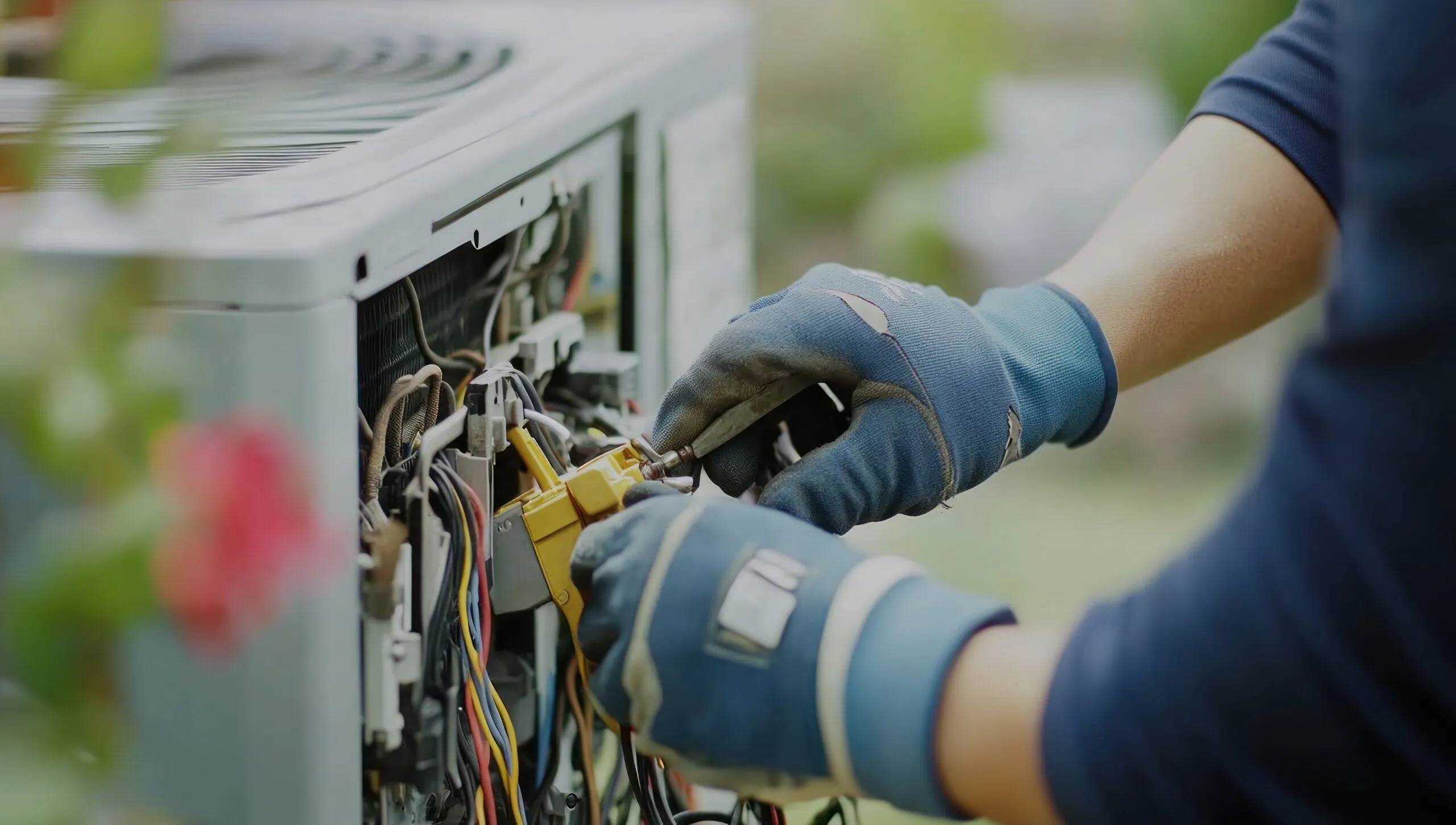
Electrical components — capacitors, contactors, relays — are another area to leave alone. These components carry voltage even when the system is off. Diagnosing or replacing them without the right knowledge and tools turns a manageable repair into a much more expensive one.
Compressor problems, frozen coils that keep coming back, and anything requiring sealed components all fall into the same category. The underlying cause needs diagnosis before anything is replaced. That diagnosis requires equipment and experience most homeowners don’t have.
The Honest Case for Calling Sooner
Here’s what I see in practice. A homeowner notices something off with their AC, tries a few things, and waits a few weeks to see if it resolves itself. By the time they call, a straightforward repair has turned into something more involved — or the system fails entirely on the hottest week of the summer.
I’m not saying call me the moment your AC makes an unfamiliar sound. But if your troubleshooting hasn’t turned anything up and the system still isn’t performing right, earlier is almost always better than later. A problem caught in May is a lot less disruptive than the same problem caught in July.
If your AC is short cycling, making unfamiliar noises, blowing air that isn’t cold, or struggling to keep up on a hot day — those are worth a call. None of them are guaranteed to mean something serious. All of them are worth having looked at before they get worse.
To learn more about AC repair services, visit my AC Repair page.